
Jango App
UX Case Study
Overview:
The purpose of this case study was to do an analysis of the Jango app, identify the user problems, and provide possible solutions in terms of user experience optimization.
Role: UX Designer
Tools: Illustrator, Photoshop, Figma and InVision


Design Process
1-. Summary
2-. Paint Points
3-. User
Types
4-. Journey Map
5-. User Tasks
6-. New Design
1-. Summary
• Jango is a free music platform, and one of the main features is that it can be used on a desktop computer, or it can be downloaded on smartphone device.
• Users can have access to uninterrupted playlists, and extended music libraries of different kinds of music.
• Its music libraries are not limited to just English, so this app allows the users to enjoy music in a variety of languages.
• Users can create a profile, build their own playlist, and even they get suggestions of similar artists according to their list.
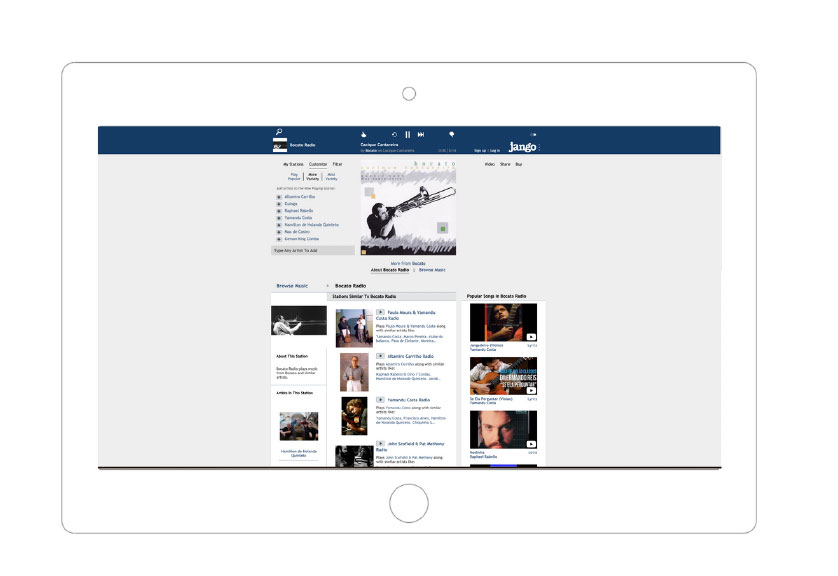
Jango App Interface
2-. Paint Points
Design
The app has a poor design in terms of colours and a confusing layout and interface. Its poor interface design and lack of usability testing makes it very difficult to navigate throughout the app.
Usability
Jango gives to the users the possibility to upload new music to its libraries. However, it is not possible to see what kind of new music has been uploaded because there is not feature on the interface that makes the user know about it.
Offline Access
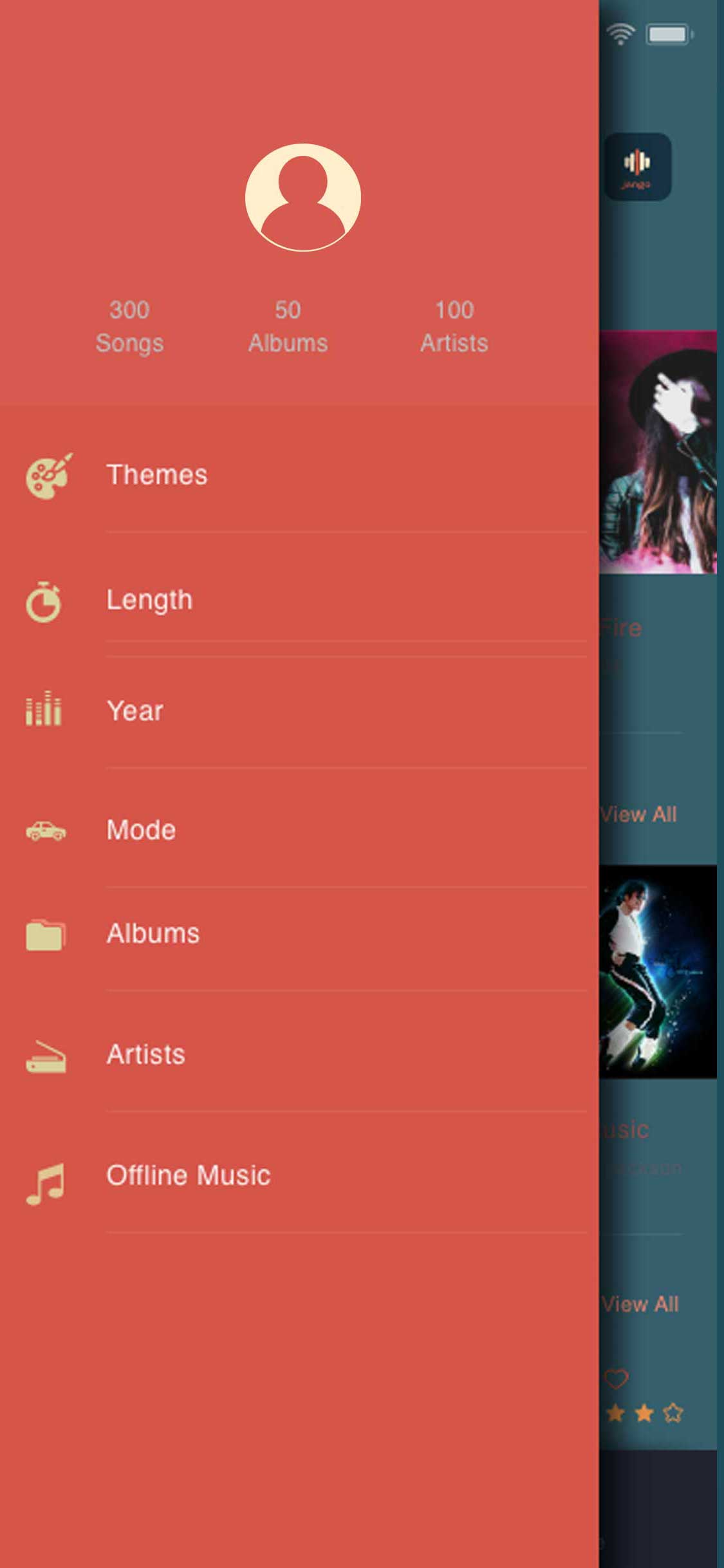
One of the main disadvantages of this app is that it does not allow you to use this app without internet connection, and this platform does not provide the feature to download music, so music offline is not an option.
Optimal Features
This app is that it does not offer premium features which are important elements in order to provide more functionality to the users. The limited features offered to the users makes it quite bland.
3-. User Types
For this case study, I decided to use some data from two platforms called Statista.com and Goodwater in order to determine the user types. By using their data, I pulled some information about music apps, especially about user profiles.
Statistics
Statistics

From the data above I could determine the following user types:
Primary Audience
-Young Adults: 18 -29 years old
This age group has changed the way to discover, buy and listen to music. This generation has left CDs and traditional radio aside, and replaced them with streaming services as their favourite sources of audio content.
Secondary Audience
-Adults 35-44 years old
Older generations of consumers among 35 to 44 years old have been slower to integrate streaming services into their lives, according to some research on statistics.
Persona

5-. Journey Map
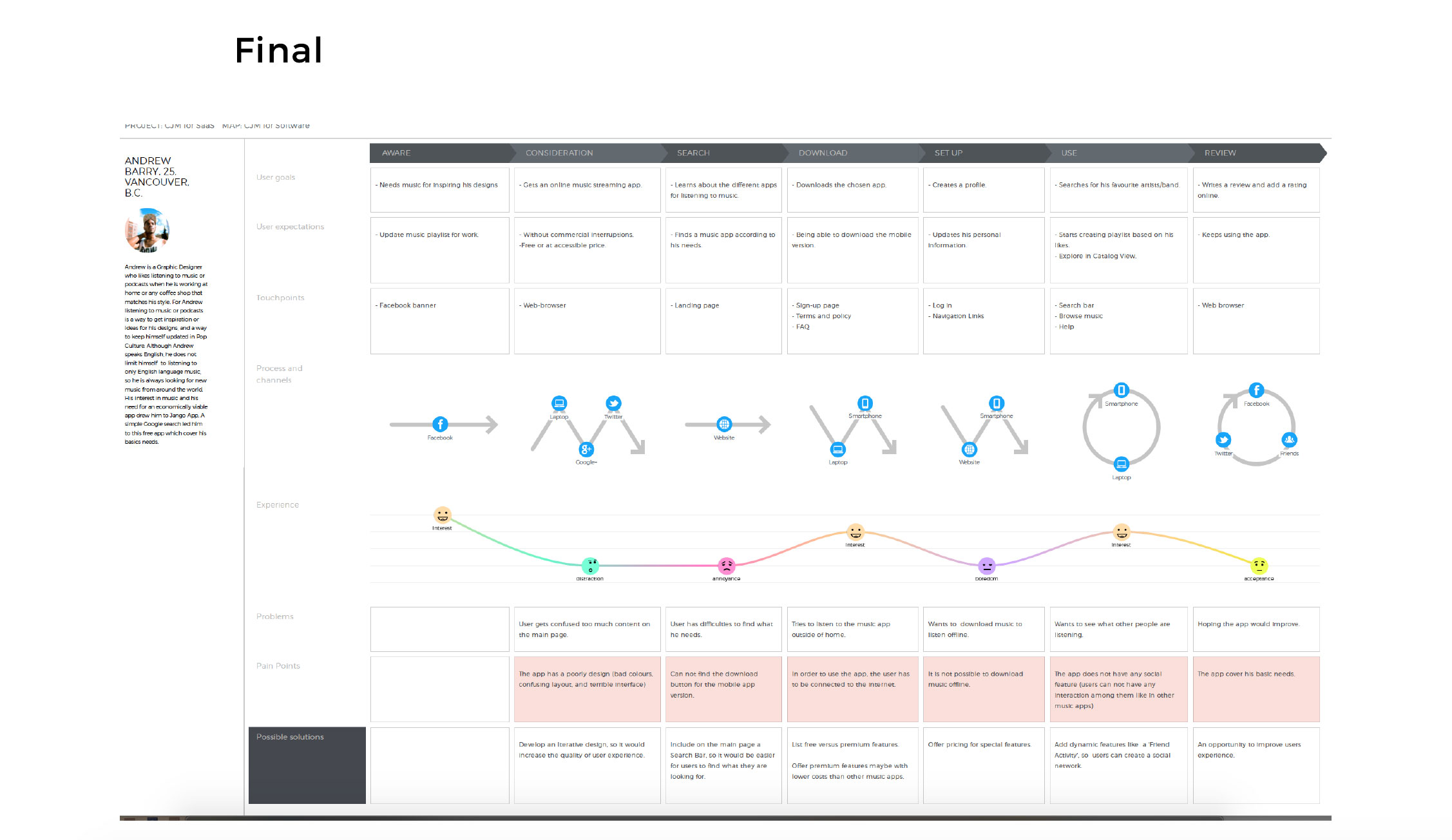
For the present case study, a map was created as a visual representation of the process a custome goes through to achieve a goal with the app.
5-. User Tasks
After identified the main tasks, I created a flow chart in order to know how was going to be the user flow to completed those tasks.

6-. New Design
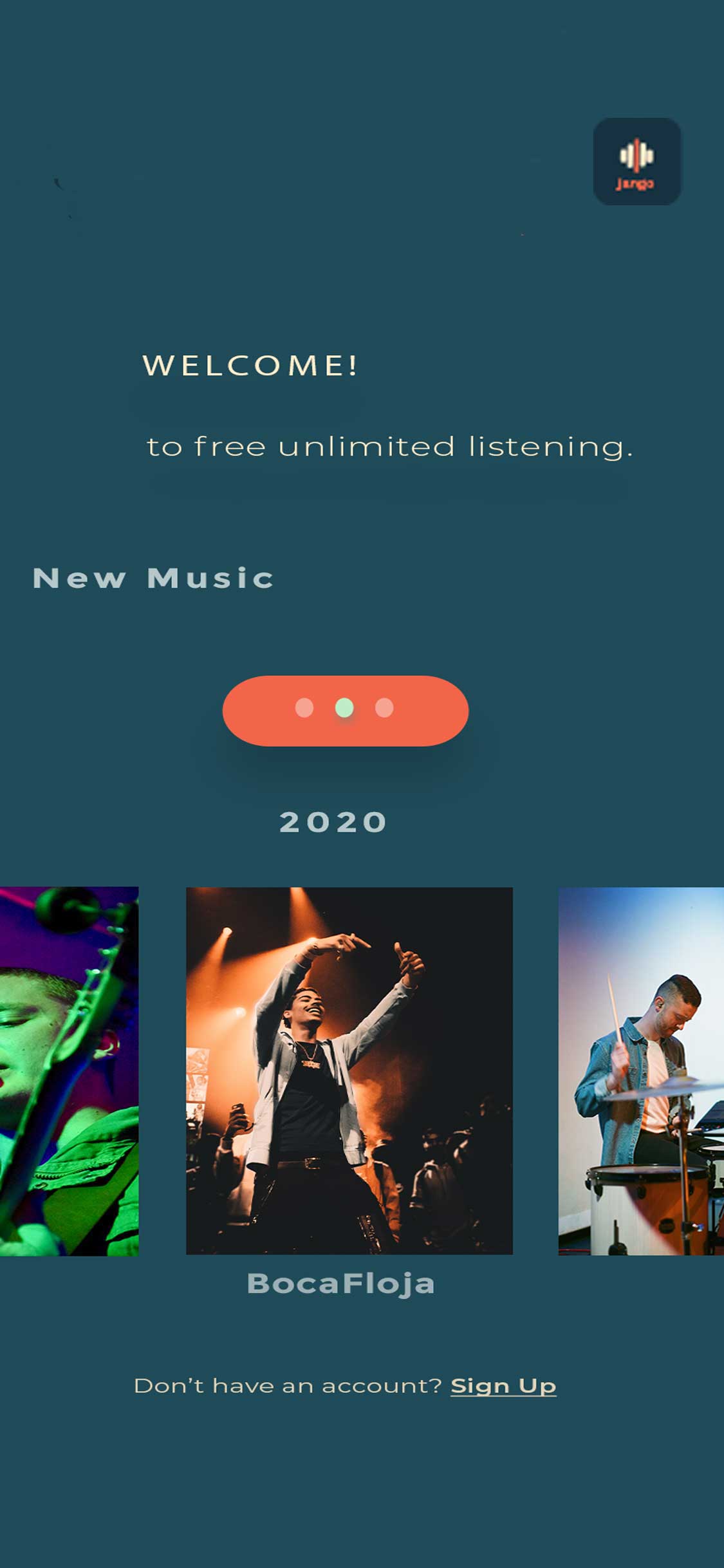
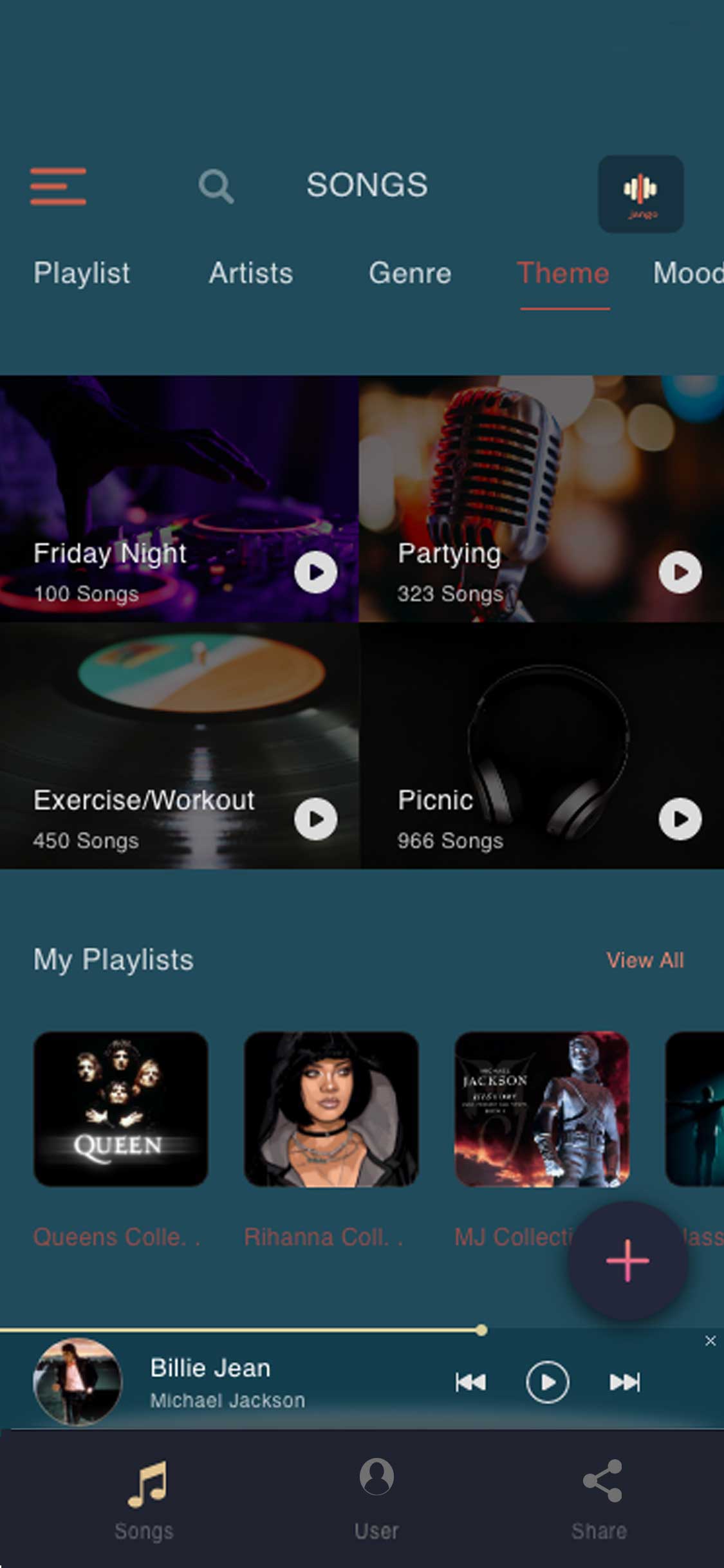
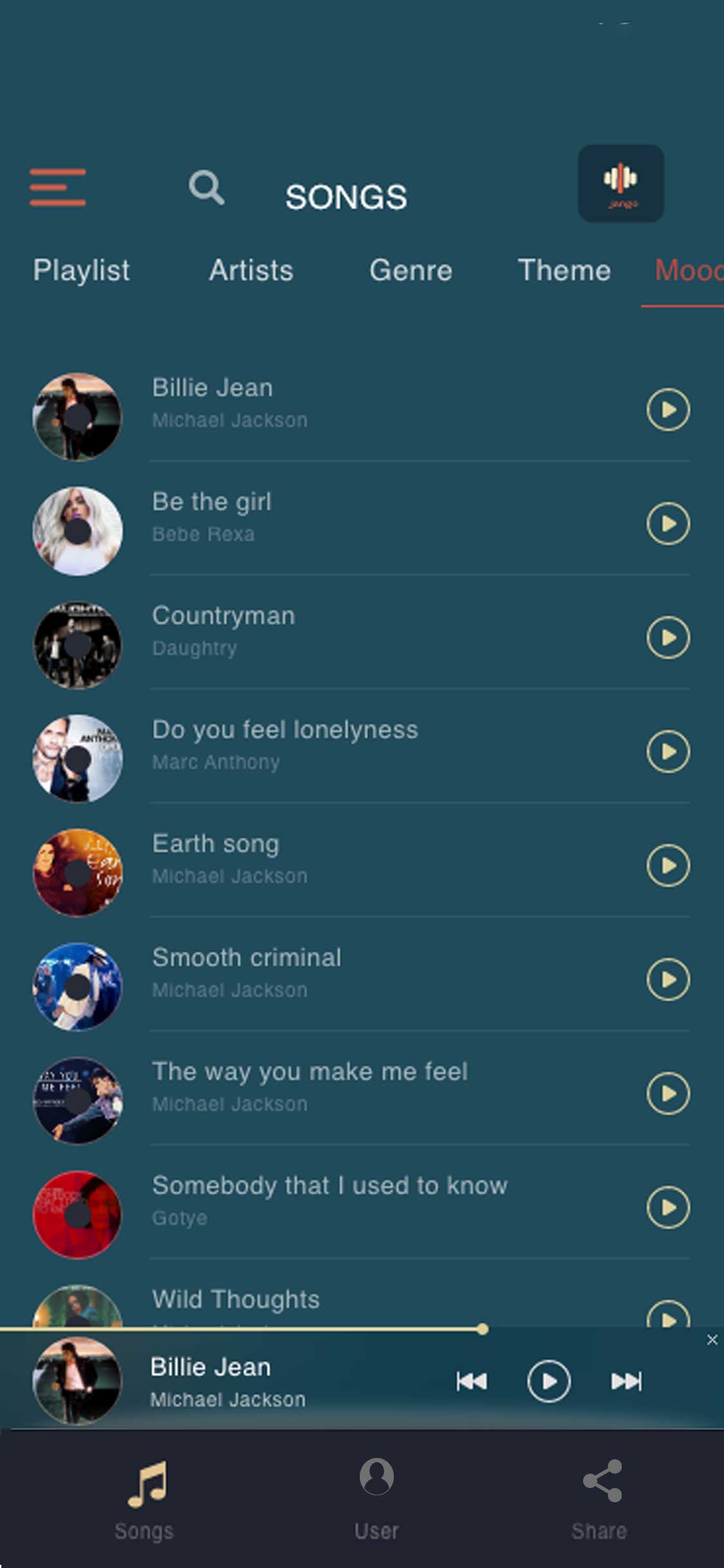
At the end, I decided to redesign the Jango app. The first step done was to create a new logo for the app and scheme colour in order to make more colourful and appealing to the users.
New Logo
Wireframes




Conclusion
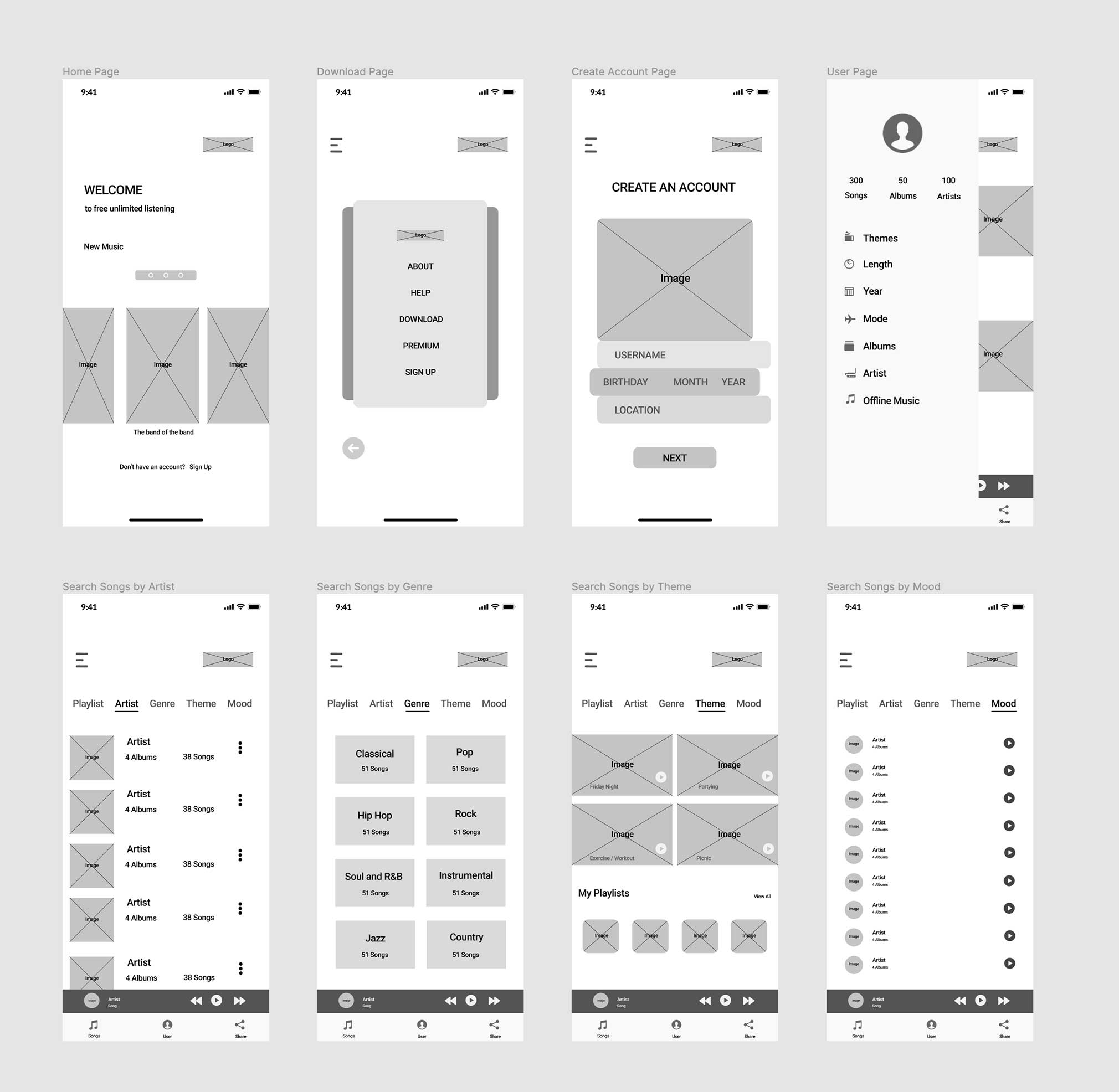
The process of redesigning the app game the opportunity to learn to use some tools to create wireframes and prototypes. Also, I could have the opportunity to include solutions and improve the user experience.